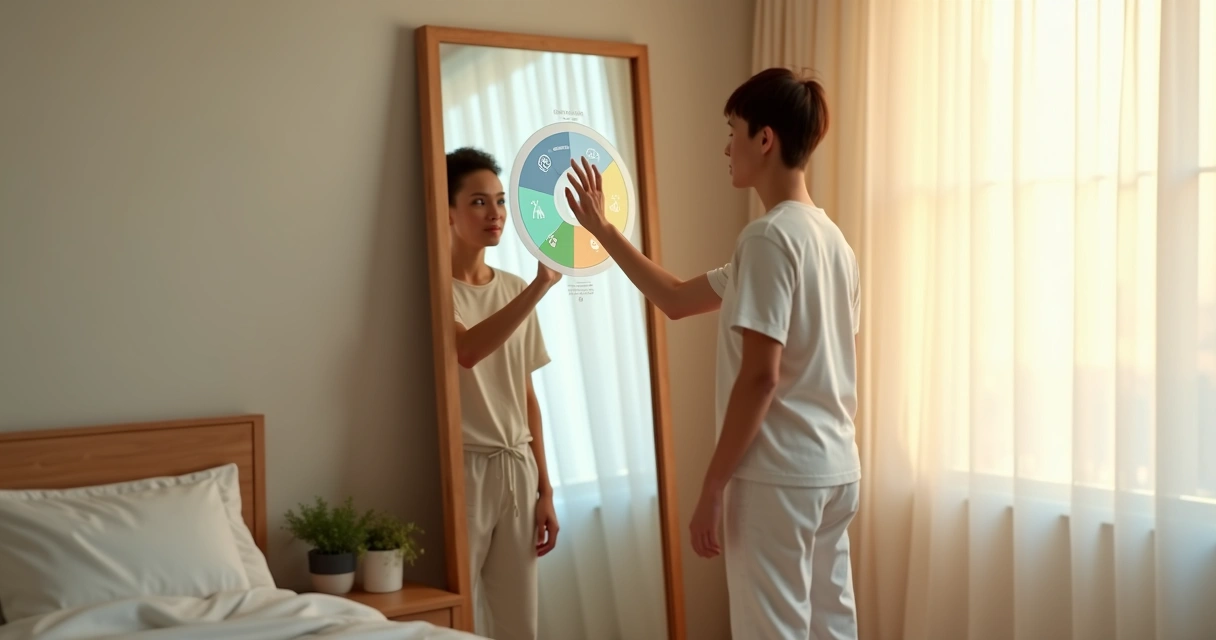


Conflict can make the body react before the mind has formed a clear sentence. We may feel heat in the face, tightness in the chest, a fast pulse, or shaky hands. In our experience, this is often the moment when good intentions disappear and old patterns take over.
When conflict rises, the nervous system does not ask who is right first. It asks whether we are safe.
That shift matters. If we want calmer conversations, we need methods that work with the body, not only with logic. We can train ourselves to steady the system in real time, even when emotions are strong.
Why conflict hits the body so fast
During tense exchanges, the body can move into a threat response within seconds. Heart rate rises. Breathing gets shallow. Attention narrows. A high-realism conflict study showed marked autonomic changes, including heart rate increases and sharp drops in heart rate variability during aggressive moments, which reflects a stress state in the body. We can see this clearly in research on real-time autonomic shifts during conflict.
This is why smart people can say things they regret. It is not only about poor communication skills. Sometimes it is a body under pressure trying to survive a social threat.
Calm is a body skill.
We have seen this in ordinary life too. A short comment at dinner, a sharp email, a look in a meeting. Small events can trigger big reactions when the system is already tired.
Methods that help in the moment
We think the best tools are simple enough to use while the conflict is still happening. If a method is too complex, we will not reach for it when the body is in alarm.
These methods can help us stay present:
- Lengthen the exhale. Breathe in gently through the nose, then breathe out a little longer than you breathed in. A longer exhale sends a safety signal to the body.
- Relax one area on purpose. Unclench the jaw, drop the shoulders, or soften the hands. One physical release can interrupt a wider stress loop.
- Slow the first reply. Instead of answering at once, pause for one breath. A brief pause can stop automatic defensiveness.
- Feel your feet on the ground. Press the soles down lightly. This simple grounding cue can pull attention away from spiraling thoughts.
We do not need to perform all of them at once. One steady action is often enough to create a small opening.

How to keep the conversation from getting worse
Once the body starts to settle, words matter again. We have found that nervous system care and communication style work best together.
Some responses lower pressure better than others:
- “I want to answer well, so I need a moment.”
- “I hear that this matters to you.”
- “I am getting activated. Can we slow down?”
- “Let us stay with one point at a time.”
A steady nervous system does not mean we agree with everything. It means we respond without losing ourselves.
We also think tone matters as much as content. A true sentence spoken too fast can still land as a threat.
Use positive signals, even in disagreement
People often assume that only hard boundaries help in conflict. Boundaries do help, but warmth also has a role. Positive signals can change the stress pattern of a difficult exchange.
A Wayne State open-access thesis found that greater positive behaviors during conflict, such as humor and affection, were linked with healthier daily cortisol patterns. That does not mean we should avoid serious topics. It suggests that respectful warmth can support recovery. We can see that in findings on positive behaviors and healthier cortisol slopes.
This may look simple in practice:
- A softer voice
- A sincere thank you
- A brief sign of care
- A small moment of shared humanity
We are not talking about forced cheerfulness. We are talking about signals that say, “This is hard, but I am not your enemy.”
Train the system before the next conflict
Real change becomes easier when we practice outside tense moments. If we only try to regulate during an argument, the task is harder.
One method with good support is HRV biofeedback. A meta-analysis across 24 studies reported strong effects for stress and anxiety reduction, with a large between-groups effect size. That gives weight to evidence on HRV biofeedback for stress and anxiety.
If we do not have a device, we can still build similar habits through regular paced breathing, quiet body scans, and short daily moments of stillness. Five minutes done often can help more than one long session done once.
We suggest a simple routine:
- Sit upright and let the face soften.
- Breathe in for a comfortable count.
- Breathe out for a slightly longer count.
- Stay with that rhythm for three to five minutes.
It is plain. That is the point. Under stress, plain methods are easier to trust.

Know your own pattern
Not everyone reacts to conflict in the same way. Some people get louder. Others go quiet. Some feel a burst of anger. Others feel frozen and blank.
A Penn State report on relationship conflict found differences in cortisol responses between men and women during high-hostility exchanges, and also showed that recovery patterns were shaped by baseline anxiety and conflict history. That means our current reaction is often linked to more than the present moment. We see that in research on stress reactions during relationship conflict.
Your reaction in conflict is not random. It is often a learned body response shaped by past stress.
When we know our pattern, we can prepare for it. If we tend to rush, we practice slowing. If we shut down, we practice naming one feeling out loud. If we become physically tense, we begin with the body before the debate.
When a pause is the wise move
Some conflicts should not continue in the same moment. If the body is too activated, more talking may only deepen harm. We have seen that stepping back can protect both truth and connection.
A healthy pause is clear and respectful. We can say when we plan to return to the issue, and then follow through. That keeps the pause from feeling like avoidance.
Try language like this:
- “I want to continue this, but not in this state.”
- “I need twenty minutes to settle, then I can talk.”
- “I am willing to come back to this at six.”
That kind of pause is not withdrawal. It is regulation in action.
Conclusion
Steadying the nervous system during conflict is not about acting calm while turmoil grows underneath. It is about meeting stress early, with skill and honesty. We can slow the breath, relax the body, ground attention, soften the first reply, and use warmth without losing clarity.
Conflict will still be uncomfortable. That is real. Yet we can learn to stay inside the discomfort without being ruled by it. When we do, we protect not only the conversation in front of us, but also the kind of presence we bring into our relationships and daily life.
Frequently asked questions
What is the nervous system in conflict?
The nervous system in conflict is the body’s stress response reacting to a perceived threat. During tension, it may increase heart rate, tighten muscles, shorten breathing, and narrow attention. This can make us defensive, impulsive, or shut down.
How to calm myself during arguments?
We can calm ourselves during arguments by slowing the exhale, relaxing the jaw or shoulders, feeling the feet on the floor, and pausing before replying. Short, clear phrases such as “I need a moment to answer well” can also reduce pressure.
What are quick ways to steady nerves?
Quick ways include taking one longer exhale, loosening the hands, lowering the voice, sipping water slowly, and naming what is happening inside, such as “I feel activated right now.” Small physical shifts can help the body move out of alarm.
Can breathing techniques help in conflict?
Yes. Breathing techniques can help in conflict because they influence the stress response directly. A gentle inhale followed by a longer exhale can support a calmer state and make it easier to think, listen, and respond with care.
Why do I feel shaky in conflicts?
Feeling shaky in conflicts often happens because the body is releasing stress energy. Adrenaline rises, muscles tense, and the system prepares for danger, even if the threat is social rather than physical. Shaking does not mean weakness. It means the body is highly activated.