

We rarely change in isolation. In our experience, people watch one another all the time, often without noticing it. A team enters a room, a few people speak first, one person interrupts, another listens with care, and within minutes a tone is set. That tone can become a norm.
Peer modeling is the process by which people adjust their behavior after observing what others around them do.
This sounds simple, but its effects run deep. What we see in families, teams, classrooms, and social groups does more than guide a single choice. It shapes what feels acceptable, expected, and even safe.
We have seen this happen in very ordinary moments. One person puts their phone away during a meeting. Soon, two more do the same. A new colleague admits a mistake without defense. The room softens. Someone thanks the support staff with genuine respect. Others follow. Small actions. Large consequences.
Why observed behavior carries so much weight
People do not learn social rules only from formal instruction. We learn by watching what gets repeated, tolerated, praised, or ignored. This is one reason group norms can shift fast, sometimes faster than policy or advice.
What people see others do often matters more than what they are told is right.
A recent university-led study on how people infer group norms from observed behavior showed a clear pattern. When more group members acted in line with a norm, observers were more likely to judge that norm as real. The shift was graded, not random. Seeing 50% of people follow a pattern already pushed judgments above chance, while 25% stayed below chance. That tells us something practical. Groups do not always need full agreement before people start reading a norm into the room.
We copy signals before we copy rules.
That matters because many group standards are unwritten. We sense them through tone, rhythm, and repetition. We notice who gets heard, who stays silent, who cuts corners, and who acts with care. The group becomes a live lesson.
How norms spread through a group
When we watch others, we are not only collecting facts. We are asking social questions, often in a split second:
What is normal here?
What brings approval?
What might cost me status or trust?
Who seems to set the tone?
These questions shape conduct. They help explain why a group can drift toward either care or disregard without any official decision being made.
A broad meta-analysis on peer influence and immediate behavior in adolescents found a moderate overall effect of peer influence, with descriptive norms, meaning what others appear to do, having a stronger role than mere presence or feedback. We think this point deserves attention well beyond adolescence. People of all ages take cues from visible behavior, especially in uncertain settings.
There is also a difference between hearing a value and seeing it enacted. A workplace may say respect matters. But if meetings reward speed, ego, and interruption, the lived norm says something else. The body trusts what it witnesses.

When one person changes the room
Sometimes people think group pressure only works when many people act the same way. Yet one visible act can have surprising force.
A set of laboratory and field experiments on rule compliance after observing peer behavior found that seeing just one peer break a rule lowered compliance by about 8 percentage points, even across different group sizes. At the same time, the findings also showed some resilience. Even when all six peers violated the rule, about half of participants still followed it.
We find this dual result very human. People are impressionable, but not empty. They respond to social signals, yet many still hold an inner line. This means peer modeling is powerful, not absolute.
It also means visible conduct from one person can either weaken or steady a group. A careless shortcut can spread. So can calm integrity.
One modeled action can lower a standard, but one modeled action can also protect it.
What makes peer modeling work?
Not every observed behavior has the same effect. Some actions pass by unnoticed. Others become social reference points. In our view, peer modeling works best when three conditions are present.
First, the behavior is visible. People cannot mirror what they do not see.
Second, the actor seems relevant to the group. Relevance may come from status, closeness, confidence, or timing.
Third, the group context is a bit uncertain. The less clear the norm, the more people look sideways for guidance.
We also notice that repeated examples matter more than slogans. When a behavior appears often, it stops looking like a personal quirk and starts feeling like a group pattern.
Visible actions shape expectations faster than private beliefs.
Repeated actions feel safer to copy than isolated ones.
Emotion matters because people mirror tone as well as conduct.
Ambiguous settings increase the pull of social cues.
This helps explain why culture can shift quietly. Not through one speech, but through dozens of watched moments.
How norms move from observation to intention
Observed behavior does not stop at imitation. It can also shift what people privately approve of and what they plan to do next.
A set of developmental findings on the path from group norms to personal intentions showed that exposure to norms moved attitudes by about 1.16 points on an 11-point scale, while intentions shifted in meaningful ways too. In simple terms, what people saw around them changed not only outward behavior, but inner orientation.
That has social weight. If a group normalizes contempt, dishonesty, or indifference, members may slowly stop resisting those patterns inside themselves. The opposite is also true. If a group models honesty, patience, and shared care, people often begin to want those ways of being, not just perform them.
Using peer modeling with care
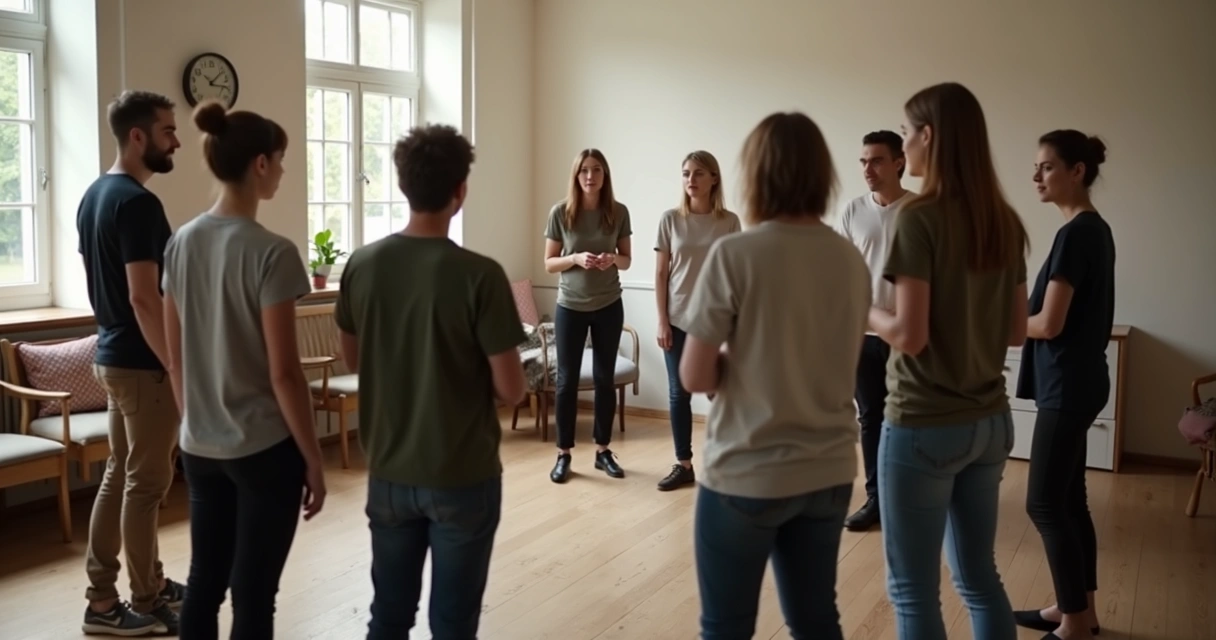
If we want healthier group norms, we should pay less attention to statements alone and more attention to visible examples. The question is not only, “What do we value?” It is also, “What do people watch us repeat?”
We can guide peer modeling in simple ways:
Name the behavior we want to see.
Make that behavior visible in real interactions.
Support people who model it with consistency.
Address harmful modeling early, before it hardens into custom.
This applies in teams, schools, homes, and communities. We think many culture problems persist not because people lack values, but because the wrong examples stay in circulation too long.
Conclusion
Peer modeling shows us that group norms are always being taught. Not only through rules, but through conduct in plain sight. People read the room, and then they help write it.
When we understand this, responsibility becomes more concrete. Each visible act contributes to a shared field of permission. We are telling others what is welcome, what is tolerated, and what kind of group this is.
Observed behavior does not just reflect culture. It builds it.
That is why one honest voice, one respectful action, or one steady refusal to follow a harmful pattern can matter more than it first appears. Groups change when people can see the change.
Frequently asked questions
What is peer modeling in groups?
Peer modeling in groups is the process in which people adjust their behavior after watching how others in the group act. It helps form shared ideas about what is normal, accepted, or expected.
How does peer modeling change behavior?
It changes behavior by giving people visible social cues. When someone sees others repeat an action, they may view it as safer, more accepted, or more fitting for that setting, and then copy it.
Why is peer modeling effective?
It is effective because people learn social rules through observation. Visible behavior feels immediate and real, especially in situations where norms are unclear or where group belonging matters.
Can peer modeling improve teamwork?
Yes. When team members model listening, accountability, respect, and calm communication, those actions can spread through the group and strengthen trust, coordination, and mutual support.
When should I use peer modeling?
You should use peer modeling when you want to shape group conduct through visible example, especially during onboarding, team change, conflict repair, classroom routines, or any moment when people are looking for cues about how to behave.