


We live in a world where doing several things at once often feels like the only way to keep up. Check email while writing reports. Scroll through the phone during meetings. Switch between conversations, notifications, and to-do lists. Many of us have felt the thrill of juggling different tasks, convinced that we are accomplishing more. But when we look at what neuroscience reveals about multitasking, the reality is very different. Multitasking doesn’t just split our attention – it also reduces our ability to be present, aware, and connected to life as it unfolds. Let’s look at why this happens and what’s going on inside the brain when we try to do too much at once.
The science of presence: What does it really mean?
Presence can be described as the quality of being fully engaged with whatever is happening right now. It means noticing sounds, thoughts, sensations, and emotions as they arrive. In neuroscience, presence is linked to the brain’s default mode network and attentional systems, which together support our ability to anchor consciousness in the moment. When we are present, we are able to
- Pay attention to one experience at a time
- Notice details and nuance
- Regulate our emotions and behaviors
- Form deeper connections with people and tasks
Presence is not simply an abstract idea. Instead, it’s the result of specific neural processes that focus and coordinate attention. When those processes are overloaded, presence begins to weaken.
What multitasking does to the brain
The brain is built to attend to one complex task at a time. When we multitask, our attention (and the related neural resources) is forced to keep switching between different mental “tracks.” This is often called task-switching rather than true multitasking, since our brains cannot fully process two high-demand tasks at the exact same moment. Each time we switch, there is a cost: time lost, errors made, and a drop in the quality of engagement.

Let’s look at how this happens through a closer examination of key brain functions:
- Prefrontal cortex overload: This area of the brain manages complex thought, decision-making, and attention. When asked to manage several unrelated tasks, the prefrontal cortex becomes stretched, reducing its effectiveness. Mistakes become more common, and stress rises.
- Dopamine seeking: Every time we switch tasks, the brain receives a small burst of dopamine – the neurotransmitter related to pleasure and reward. This can make multitasking feel addictive, despite how it hurts our ability to focus.
- Working memory fragmentation: Our working memory has limited “slots.” When overloaded by concurrent tasks, details slip through, and information becomes scattered.
- Default mode network disruption: The brain’s system for self-awareness and reflection is interrupted by constant shifting, making it harder to stay grounded in experience.
We have found that regular multitasking shifts the brain into a more distracted, less reflective state. Presence is replaced by restlessness. Engagement is swapped for a shallow awareness of many things, but not a deep awareness of anything.
How multitasking weakens presence in daily life
The neuroscience is clear, but what does weakened presence actually feel like? We’ve gathered observations from daily life that show the effects:
- Sensory details fade – We stop noticing the taste of food, the tone of a friend’s voice, or subtle changes in our environment.
- Memory suffers – Recalling what happened during a conversation, meeting, or drive becomes harder.
- Stress rises – The nervous system stays on higher alert, pumping more stress hormones and making calmness rare.
- Relationships lose warmth – People feel unheard or unseen when attention is split. True listening is rare.
- Creativity drops – Our ability to think deeply, form new ideas, or reflect is reduced when the mind is busy switching.
Trying to do many things at once makes us present to none of them.
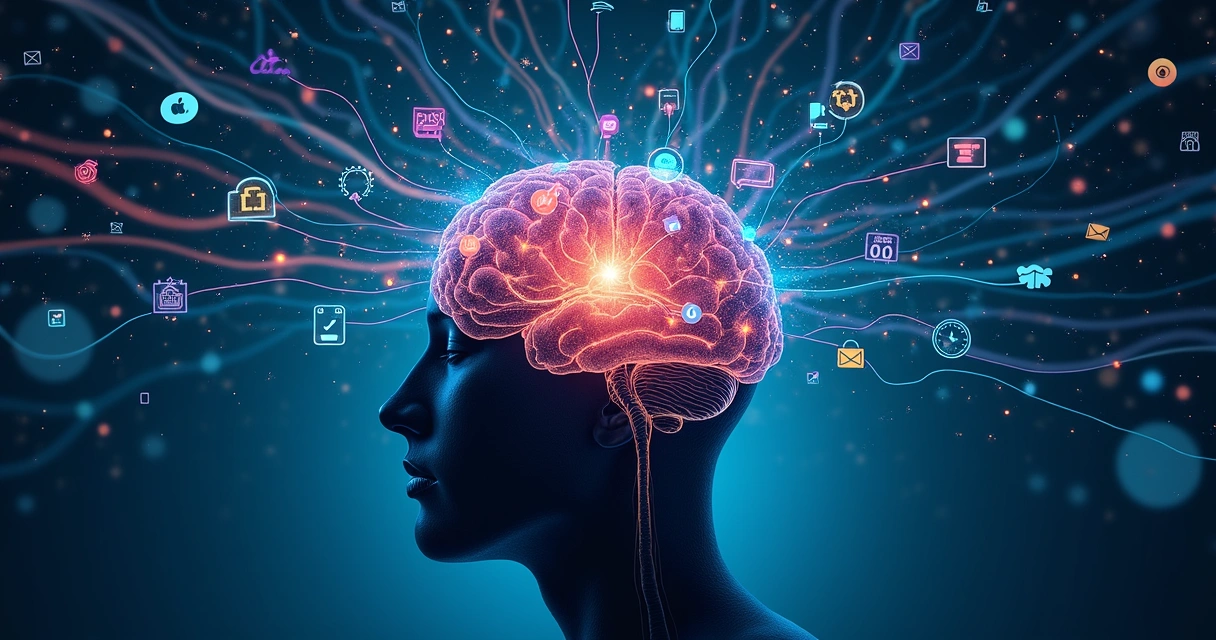
Presence fades when attention is divided.
Why do we still believe in multitasking?
It is tempting to think that doing more things at once will get more done. The “multitasking myth” has become part of our cultural expectations at school, work, and even at home. We see fast task-switching as skill and admire those who keep many balls in the air. But research continues to show that people simply feel more productive while multitasking, even though their results suffer.
We have noticed that people who multitask often struggle to see the effects at first, because they’re distracted. The feeling of being busy masks the loss of presence and clarity. Only when we step back do we notice how much quality, depth, and peace we lose to constant switching.
How can we reclaim presence in a multitasking world?
If modern life keeps demanding more of our attention, how do we become more present again? From a neuroscience perspective, presence improves when we align our habits with how the brain works best. We have seen several strategies help:
- Single-task more often: Focusing on one thing at a time gives the brain a “rest” from switching and supports deeper engagement. Set a timer and stick with one task until the buzzer.
- Take mindful breaks: Instead of distractions, spend some moments breathing, stretching, or noticing your surroundings. This gives the nervous system space to reset.
- Limit notifications: Design technology routines that reduce interruptions. This protects focus and helps regain control over attention.
- Reflect before switching: Pause for a breath and check in. Is it time to change tasks, or is it just a habit?
- Practice attention training: Activities like meditation and focused breathing help build the “muscles” of attention that fight back against constant distraction.
Presence is a practice, not just a feeling. Small, regular adjustments can train the mind to notice, to choose, and to stay.
Conclusion
Multitasking weakens our presence by fragmenting attention, overloading brain systems, and disconnecting us from what is truly happening now. The neuroscience reveals that what feels like efficiency is actually a series of costly interruptions, each stealing some of our clarity and connection. When we choose single-tasking, awareness rituals, and moments of stillness, we give our brains the chance to work as they were meant to: one mindful moment at a time. The experience of life becomes richer, deeper, and more meaningful—not more crowded. This is not about doing less, but about living more fully wherever we are.
Frequently asked questions
What is presence in neuroscience?
In neuroscience, presence means being fully focused on the present moment—perceiving what’s happening inside and outside of us without distraction. The brain’s attentional networks and the default mode network help us anchor awareness and self-reflection. When these systems work together, we experience a stable, engaged sense of “now.”
Why does multitasking reduce presence?
Multitasking reduces presence because the brain can only give full attention to one complex thing at a time. When we switch between tasks, the mental resources needed for focus are split, and attention becomes scattered. This prevents deep engagement, leading to partial awareness of everything, but full awareness of nothing.
How does the brain handle multitasking?
The brain handles multitasking by switching quickly between tasks, a process called task-switching. Each switch creates a “switch cost”—the loss of attention and time required to redirect focus. This constant shift uses up more mental energy and increases the risk of mistakes. The brain does not process multiple high-focus tasks in parallel, but instead jumps between them rapidly.
Can I train my brain for better presence?
Yes, presence can be trained. We can strengthen our brain’s ability to focus through activities like mindful breathing, meditation, and single-tasking routines. Reducing distractions, allowing time for reflection, and intentionally focusing on one thing at a time all help make presence more natural over time.
Is multitasking ever good for the brain?
Multitasking is not good for attention or presence when tasks are complex or require focus. However, we can perform simple, automatic tasks together (like walking and talking) without much trouble. True multitasking only works well when at least one task is “background” and needs little attention. For high-focus activities, the brain works best with single-tasking.